 ChessMess
Adolf Anderssen: the master of the Immortal Game
Adolf Anderssen (1818–1879) won London 1851, the first international chess tournament, and played the Immortal and Evergreen Games. His life, style and legacy.
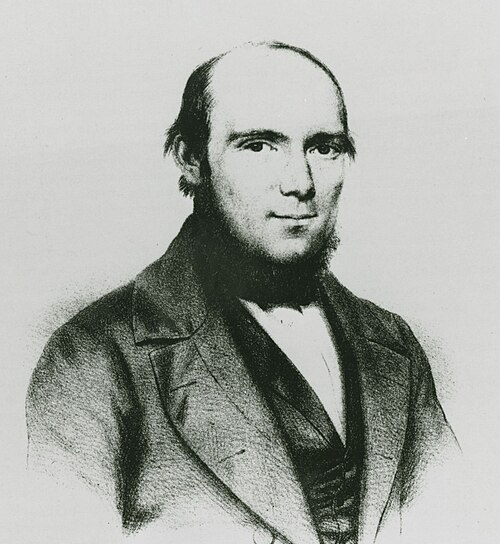
Adolf Anderssen (1818–1879) was a German mathematics teacher who became the strongest chess player in the world. He won London 1851, the first great international tournament, and played two of the most famous attacking games in history, the Immortal Game and the Evergreen Game. His bold play is the best example of the "Romantic" style of the 1800s, when players loved attacks and sacrifices.
A teacher who played chess
Anderssen was born on 6 July 1818 in Breslau, then part of Prussia and today the city of Wrocław in Poland. He learned chess as a boy, at about the age of nine. After university he spent his whole working life as a mathematics teacher, later a professor, at the Friedrichs-Gymnasium, a secondary school in Breslau. Chess was something he did in his free time.
He first became known for chess problems, puzzles in which you must find a hidden win. In 1842 he published a collection of 60 of them, and for many years he also helped edit a leading German chess magazine.
London 1851
In 1851 the English master Howard Staunton organised a big international tournament in London, the first of its kind. Staunton even offered to pay Anderssen's travel costs if he failed to win a prize. He did not need the money. Playing knockout matches, Anderssen beat Lionel Kieseritzky, József Szén, Staunton himself and Marmaduke Wyvill, and won the event. From then on he was seen as the best player in the world.
Ups and downs
In 1858 Anderssen played Paul Morphy in Paris and lost clearly, with 2 wins, 7 losses and 2 draws. When Morphy gave up chess, Anderssen was back on top: he won the London tournament of 1862 with 12 points out of 13. In 1866 he lost a close match to Wilhelm Steinitz, 6 wins to 8, but in 1870 he won the strong Baden-Baden tournament ahead of Steinitz. In 1877 a tournament was held in Leipzig in his honour, 50 years after he had learned the game. He died in Breslau on 13 March 1879.
How Anderssen played
Anderssen loved to attack the king. He opened lines quickly and was happy to give away pieces if that meant reaching the enemy king first. In his era, players valued a brave attack more than careful defence. But he was not reckless, and Steinitz named him as one of the two greatest attacking players of the time. He did better in tournaments than in long matches.
Famous game: the Immortal Game, London 1851
During the London tournament of 1851, Anderssen played a friendly game against Lionel Kieseritzky, a strong master who lived in Paris. It began with the King's Gambit, an old attacking opening in which White offers a pawn with 2.f4. What followed was astonishing. Anderssen gave up a bishop, both rooks and finally his queen, and still checkmated Black with his three remaining minor pieces. In 1855 the Austrian master Ernst Falkbeer named it the Immortal Game.
One honest note: Kieseritzky himself reported that he resigned around move 20, before the famous finish. The queen sacrifice and mate shown here are how the game is usually printed, and they show what would have happened.
The moves: 1.e4 e5 2.f4 exf4 3.Bc4 Qh4+ 4.Kf1 b5 5.Bxb5 Nf6 6.Nf3 Qh6 7.d3 Nh5 8.Nh4 Qg5 9.Nf5 c6 10.g4 Nf6 11.Rg1 cxb5 12.h4 Qg6 13.h5 Qg5 14.Qf3 Ng8 15.Bxf4 Qf6 16.Nc3 Bc5 17.Nd5 Qxb2 18.Bd6 Bxg1 19.e5 Qxa1+ 20.Ke2 Na6 21.Nxg7+ Kd8 22.Qf6+ Nxf6 23.Be7# 1-0
Our Immortal Game lesson explains every idea, and you can replay the game on the analysis board. If you enjoy this kind of chess, try the sacrifice puzzles.
The Evergreen Game
A year later, in Berlin in 1852, Anderssen beat Jean Dufresne with another famous combination: he sacrificed his queen and finished with a mating net made by his two bishops. After Anderssen's death, Steinitz praised one of its moves as an evergreen in Anderssen's crown of laurels, and the name stuck. Our Evergreen Game lesson shows how it works.
Legacy
Anderssen was the leading player of the 1850s and early 1860s, before there was an official world champion. His games are often the first ones coaches show beginners, because they show so clearly how fast development and open lines can beat extra material. Arpad Elo, the inventor of the Elo rating system, later estimated that Anderssen was the first player to reach a playing strength of over 2600.
Sources
- Adolf Anderssen, Wikipedia
- Immortal Game, Wikipedia (history, Kieseritzky's account and game score)
- Evergreen Game, Wikipedia
Checked in November 2026.
Questions and answers
- What is Adolf Anderssen famous for?
- For winning London 1851, the first international chess tournament, and for two brilliant attacking games: the Immortal Game (1851) and the Evergreen Game (1852).
- Was Adolf Anderssen a world champion?
- Not officially, because the title did not exist until 1886. But he was widely seen as the world's leading player from 1851 to 1858, and again in the early 1860s.
- Who beat Adolf Anderssen in a match?
- Paul Morphy beat him in Paris in 1858, and Wilhelm Steinitz beat him in London in 1866 by 8 wins to 6.
- Why is it called the Immortal Game?
- The Austrian master Ernst Falkbeer gave it that name in 1855, because Anderssen gave away so much material, including his queen and both rooks, and still won.
Play free now — no sign-up needed