 ChessMess
José Raúl Capablanca: the Cuban world chess champion
José Raúl Capablanca (1888–1942), the Cuban genius who was world champion from 1921 to 1927, famous for simple, clear play and superb endgames.
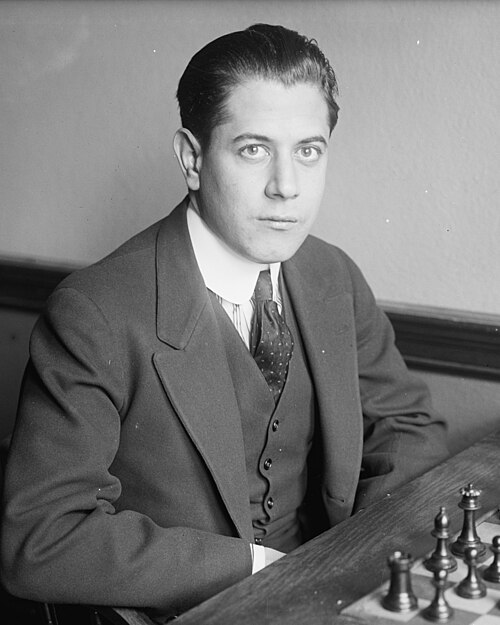
José Raúl Capablanca (1888–1942) was a Cuban chess genius and the third official world champion, holding the title from 1921 to 1927. He made chess look easy: his moves were simple and clear, he rarely made mistakes, and his endgame play is still studied today. From 1916 to 1924 he did not lose a single serious game.
A boy from Havana
Capablanca was born on 19 November 1888 in Havana, Cuba. He learned chess at the age of four by watching his father play, and soon beat him. At 13 he won a match against Juan Corzo, the champion of Cuba.
Later he went to New York to study at Columbia University. He joined the Manhattan Chess Club, quickly became its strongest player, and left university to focus on chess. In 1909 he beat the leading American player Frank Marshall in a match by 8 wins to 1, with 14 draws. In 1911 he won his first great international tournament, at San Sebastián in Spain, ahead of most of the world's best. From 1913 he worked for the Cuban Foreign Office as a kind of travelling ambassador, which left him time to play.
World champion
In March and April 1921 Capablanca finally played Emanuel Lasker for the world title, in Havana. He won four games and drew ten without losing any, and Lasker resigned the match. Capablanca was the new world champion.
His unbeaten run lasted from February 1916 until March 1924: 63 serious games, with 40 wins and 23 draws. It ended when Richard Réti beat him at New York 1924. In 1927 he won another New York tournament without losing a game, but later that year he played Alexander Alekhine in Buenos Aires and lost the title, with 3 wins, 6 losses and 25 draws. He wanted a rematch, but the two sides never agreed on terms.
Capablanca kept playing at the top level into the late 1930s. On 7 March 1942 he collapsed at the Manhattan Chess Club in New York, and he died the next day of bleeding in the brain. He was 53.
Simple, clear chess
Capablanca was nicknamed "the Human Chess Machine". He liked clear positions, and he was happy to trade pieces to reach an endgame he understood better than his opponent. He found good moves very quickly, and he could also calculate sharp tactics when he needed to. His book Chess Fundamentals (1921) explains his ideas in simple language; Mikhail Botvinnik called it the best chess book ever written.
Famous game: Capablanca vs Tartakower, New York 1924
This game, played on 23 March 1924, is a model of endgame play. By move 34 only a rook each and some pawns were left. Capablanca's rook had already reached the seventh rank, the row where Black's pawns start, and a rook there does a lot of damage. Then he did something surprising: he gave away two pawns so that his king could walk up the board.
With his king near the enemy king, his rook on the seventh rank and his pawn on g6, Black was caught in a net. Capablanca won back his pawns and more, and Tartakower resigned after White's 52nd move. Learn more about rooks on the seventh rank in our lesson on open files, and practise similar positions with rook endgame puzzles.
The moves: 1.d4 e6 2.Nf3 f5 3.c4 Nf6 4.Bg5 Be7 5.Nc3 O-O 6.e3 b6 7.Bd3 Bb7 8.O-O Qe8 9.Qe2 Ne4 10.Bxe7 Nxc3 11.bxc3 Qxe7 12.a4 Bxf3 13.Qxf3 Nc6 14.Rfb1 Rae8 15.Qh3 Rf6 16.f4 Na5 17.Qf3 d6 18.Re1 Qd7 19.e4 fxe4 20.Qxe4 g6 21.g3 Kf8 22.Kg2 Rf7 23.h4 d5 24.cxd5 exd5 25.Qxe8+ Qxe8 26.Rxe8+ Kxe8 27.h5 Rf6 28.hxg6 hxg6 29.Rh1 Kf8 30.Rh7 Rc6 31.g4 Nc4 32.g5 Ne3+ 33.Kf3 Nf5 34.Bxf5 gxf5 35.Kg3 Rxc3+ 36.Kh4 Rf3 37.g6 Rxf4+ 38.Kg5 Re4 39.Kf6 Kg8 40.Rg7+ Kh8 41.Rxc7 Re8 42.Kxf5 Re4 43.Kf6 Rf4+ 44.Ke5 Rg4 45.g7+ Kg8 46.Rxa7 Rg1 47.Kxd5 Rc1 48.Kd6 Rc2 49.d5 Rc1 50.Rc7 Ra1 51.Kc6 Rxa4 52.d6 1-0
Replay it on the analysis board to watch the king's walk.
Legacy
Many great players have called Capablanca the most natural talent the game has seen. Lasker said he had known many chess players but only one genius, Capablanca, and Bobby Fischer admired his light touch. His clear, economical style is still the model for playing simple positions well. See him among the other title holders on our world chess champions page.
Sources
- José Raúl Capablanca, Wikipedia
- José Raúl Capablanca, World Chess Hall of Fame
- World Chess Championship 1921, Wikipedia
- New York 1924, Round 6, ChessBase (round report and game score)
Checked in November 2026.
Questions and answers
- When was Capablanca world champion?
- From 1921, when he beat Emanuel Lasker in Havana, until 1927, when he lost to Alexander Alekhine in Buenos Aires.
- Why is Capablanca famous?
- For his effortless, clear style, his endgame skill and his long unbeaten run: from 1916 to 1924 he did not lose a serious game. He was nicknamed the Human Chess Machine.
- What was the score of the 1921 world championship?
- Capablanca won 4 games, 10 were drawn and Lasker won none. Lasker then resigned the match, so the final score was 9–5.
- Did Capablanca ever get a rematch against Alekhine?
- No. After losing in 1927 he wanted a return match, but the two sides never agreed on terms, and it never happened.
Play free now — no sign-up needed