 ChessMess
Wilhelm Steinitz: the first official world chess champion
Wilhelm Steinitz (1836–1900) became the first official world chess champion in 1886 and taught the world positional chess. His life, his ideas and his best game.
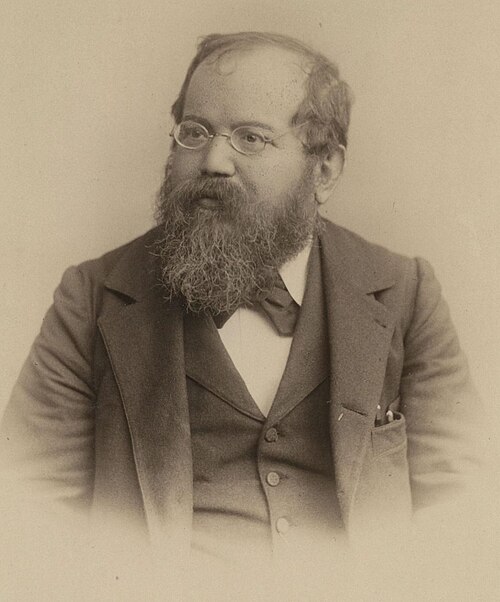
Wilhelm Steinitz (1836–1900) was the first official world chess champion. He won the title in 1886 by beating Johannes Zukertort and held it for eight years. Even more important, he changed how people think about chess: he showed that games are usually won by collecting small advantages, not by attacking at any cost.
From Prague to London
Steinitz was born on 14 May 1836 in Prague, then part of the Austrian Empire, into a Jewish family. In 1857 he moved to Vienna to study mathematics, and by 1861 he was the city's chess champion. In 1862 he played for Austria at a big tournament in London and decided to stay there as a professional chess player.
In 1866 he beat Adolf Anderssen, then the leading player in the world, in a match by 8 wins to 6. From then on Steinitz was one of the very best. In 1883 he moved to New York, and in 1888 he became an American citizen and changed his first name to William.
The first world champion
In 1886 Steinitz played Johannes Zukertort in the first match officially played for the title of world champion. The match moved between three American cities: New York, St Louis and New Orleans. The first player to win ten games would be champion. Steinitz started badly and was soon 4 games to 1 down, but then took control and won with 10 wins, 5 losses and 5 draws.
He then won further title matches against Mikhail Chigorin (1889 and 1892) and Isidor Gunsberg (1890–91). In 1894 he lost it to Emanuel Lasker, who was 32 years younger, and he lost a rematch in Moscow in 1896–97. His last years were hard. He was poor and ill, spent time in hospitals, and died in New York on 12 August 1900.
His ideas in plain words
Until the early 1870s Steinitz attacked whenever he could, like everyone else. Then, at the Vienna tournament of 1873, he began to play in a new way, and he spent the rest of his life explaining it. In simple terms:
- Don't attack until you have an advantage. An attack started too early fails against good defence.
- Collect small advantages: a healthier pawn structure, more space, a safe square for a knight in the enemy half, or the pair of bishops.
- When the small advantages add up, a winning attack or combination will appear.
- A well-defended king can survive an attack, so defending is a skill, not a sign of weakness.
He wrote about these ideas in his International Chess Magazine and in his book The Modern Chess Instructor (1889). Some critics of his day called his style cowardly. Today it is simply called positional chess, and every strong player uses it.
Famous game: Steinitz vs von Bardeleben, Hastings 1895
This game shows that the father of positional chess could still attack brilliantly at 59. It was played on 17 August 1895 at the great Hastings tournament and began as an Italian Game. Steinitz pushed his d-pawn to open the position, then struck with 22.Rxe7+, offering a rook that Black could not safely take. Each time the black king moved, the rook checked again: on f7, on g7 and then on h7. Taking it on f7 or g7 would have let White's queen capture Black's queen on d7 with check.
After 25.Rxh7+, Curt von Bardeleben got up and left the hall without resigning. Reports from the time, collected by the chess historian Edward Winter, say he later told Steinitz he was protesting against spectators loudly applauding winners. Steinitz waited until Bardeleben's time ran out, then showed the crowd how he would have won against every defence. The game won the tournament's first brilliancy prize.
The moves: 1.e4 e5 2.Nf3 Nc6 3.Bc4 Bc5 4.c3 Nf6 5.d4 exd4 6.cxd4 Bb4+ 7.Nc3 d5 8.exd5 Nxd5 9.O-O Be6 10.Bg5 Be7 11.Bxd5 Bxd5 12.Nxd5 Qxd5 13.Bxe7 Nxe7 14.Re1 f6 15.Qe2 Qd7 16.Rac1 c6 17.d5 cxd5 18.Nd4 Kf7 19.Ne6 Rhc8 20.Qg4 g6 21.Ng5+ Ke8 22.Rxe7+ Kf8 23.Rf7+ Kg8 24.Rg7+ Kh8 25.Rxh7+ 1-0
You can replay the attack on the analysis board.
Legacy
Steinitz was the first player to treat chess almost like a science, with general rules that explain why a move is good or bad. His ideas about pawns, space and defence are now part of every chess course. He also started the line of official title holders that runs to the present day; you can follow it on our world chess champions page.
Sources
- Wilhelm Steinitz, Wikipedia
- Wilhelm Steinitz, Encyclopaedia Britannica (dates of birth and death)
- Steinitz v von Bardeleben by Edward Winter, Chess Notes
- Steinitz – von Bardeleben, Hastings 1895, IRLchess (game score from the 1896 tournament book)
Checked in November 2026.
Questions and answers
- Who was the first world chess champion?
- Wilhelm Steinitz. He beat Johannes Zukertort in 1886 in the first match played for the official title of world champion, and held the title until 1894.
- What is Wilhelm Steinitz famous for?
- For being the first official world champion and for his positional ideas: build up small advantages, such as better pawns and stronger squares, before you attack.
- Who beat Steinitz for the world title?
- Emanuel Lasker, in 1894. Lasker won 10 games to Steinitz's 5, with 4 draws, and won a rematch in Moscow in 1896–97.
- Why did Steinitz change his name to William?
- He moved to New York in 1883 and became a US citizen in 1888, and at that time he changed his first name from Wilhelm to William.
Play free now — no sign-up needed