 ChessMess
Emanuel Lasker: world chess champion for 27 years
Emanuel Lasker (1868–1941) was world chess champion from 1894 to 1921, longer than anyone else. A mathematician with a practical, fighting style.
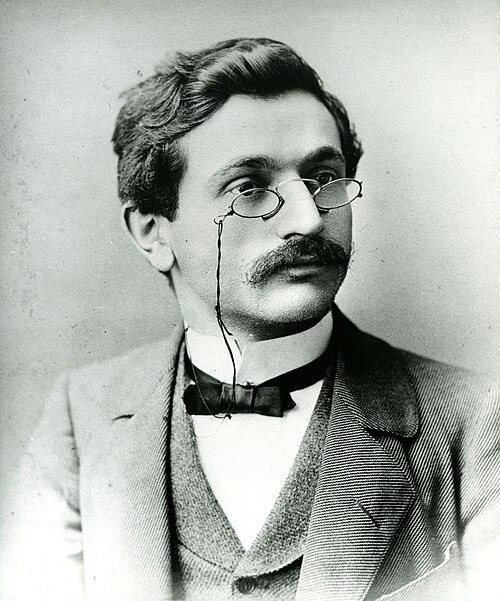
Emanuel Lasker (1868–1941) was the second official world chess champion, and he held the title for 27 years, from 1894 to 1921. No one has been world champion for longer. He was also a respected mathematician, and at the board he was a tough, practical fighter who looked for the move that would give his opponent the most trouble.
Early life
Lasker was born on 24 December 1868 in Berlinchen, a small town in Prussia that is now Barlinek in Poland. His older brother Berthold taught him chess. By the early 1890s he was among the ten best players in the world. His first big international tournament was Amsterdam 1889, where he finished second and played the famous game shown below.
World champion for 27 years
In 1894 Lasker challenged Wilhelm Steinitz, the first world champion, and won clearly, with 10 wins, 5 losses and 4 draws. He beat Steinitz again in a rematch in Moscow in 1896–97. Over the next years he defended the title against Frank Marshall (1907), Siegbert Tarrasch (1908) and Dawid Janowski (1910), and kept it in a tied match against Carl Schlechter, also in 1910.
He also won some of the strongest tournaments of his time, including St Petersburg 1914, ahead of the rising stars Capablanca and Alekhine. In 1921 he finally lost the title to José Raúl Capablanca in Havana: after 14 games, with four losses and ten draws, Lasker resigned the match. Three years later he showed he was still a great player by winning New York 1924, ahead of Capablanca.
Mathematician and thinker
Chess was only part of Lasker's life. He earned a doctorate in mathematics in 1902, and one of his papers, from 1905, was later developed further by the great mathematician Emmy Noether. He wrote books on philosophy, was an expert at bridge, played the Asian board game Go and even invented his own game, Lasca. He was also a friend of Albert Einstein.
Leaving Germany
Lasker was Jewish. In 1933, after the Nazis came to power, he had to leave Germany. He lived briefly in England, then in the Soviet Union from 1935, and moved to the United States in 1937. In Moscow in 1935, aged 66, he finished third in a strong international tournament, ahead of many younger masters. He died in New York on 11 January 1941.
How Lasker played
People in his time called Lasker's style "psychological". He studied his opponents and often chose a move that was not the most obvious one but was awkward for that particular player. He was a superb defender who could hold bad positions and then hit back, and he was very strong in the endgame. Modern writers see him above all as a practical player: he treated chess as a fight between two people, not a search for perfect moves. Many of his moves that puzzled people at the time are now normal practice.
Famous game: Lasker vs Bauer, Amsterdam 1889
In the first round of Amsterdam 1889, the 20-year-old Lasker played Johann Bauer and won with one of the most copied combinations in chess. Black's king was castled behind a wall of pawns. Lasker gave up both bishops to break it open: first 15.Bxh7+, then 17.Bxg7.
Next, Lasker's rook swung across to the h-file to join the attack. To stop mate, Bauer had to give up his queen for that rook. A few moves later 22.Qd7 attacked both black bishops at once, a fork that won one of them. Lasker was now well ahead, and he won on move 38. The double bishop sacrifice has been repeated in many later games, and it is a pattern worth knowing when attacking a castled king.
The moves: 1.f4 d5 2.e3 Nf6 3.b3 e6 4.Bb2 Be7 5.Bd3 b6 6.Nc3 Bb7 7.Nf3 Nbd7 8.O-O O-O 9.Ne2 c5 10.Ng3 Qc7 11.Ne5 Nxe5 12.Bxe5 Qc6 13.Qe2 a6 14.Nh5 Nxh5 15.Bxh7+ Kxh7 16.Qxh5+ Kg8 17.Bxg7 Kxg7 18.Qg4+ Kh7 19.Rf3 e5 20.Rh3+ Qh6 21.Rxh6+ Kxh6 22.Qd7 Bf6 23.Qxb7 Kg7 24.Rf1 Rab8 25.Qd7 Rfd8 26.Qg4+ Kf8 27.fxe5 Bg7 28.e6 Rb7 29.Qg6 f6 30.Rxf6+ Bxf6 31.Qxf6+ Ke8 32.Qh8+ Ke7 33.Qg7+ Kxe6 34.Qxb7 Rd6 35.Qxa6 d4 36.exd4 cxd4 37.h4 d3 38.Qxd3 1-0
Replay it move by move on the analysis board.
Legacy
Lasker's 27 years as champion are still a record, and modern rankings regularly place him among the ten best players of all time. He stayed at the top through several generations of opponents, from Steinitz to Capablanca and Alekhine. His practical, fighting approach is now how most strong players think. See where he fits among the other title holders on our world chess champions page.
Sources
- Emanuel Lasker, Wikipedia
- Emanuel Lasker, World Chess Hall of Fame
- World Chess Championship 1921, Wikipedia
- Lasker versus Bauer, Amsterdam, 1889, Wikipedia (game score)
Checked in November 2026.
Questions and answers
- How long was Emanuel Lasker world champion?
- 27 years, from 1894 to 1921. No one has held the official world title for longer.
- Was Emanuel Lasker a mathematician?
- Yes. He earned a doctorate in mathematics in 1902, and his 1905 work on the theory of ideals was later developed further by the famous mathematician Emmy Noether.
- Who did Emanuel Lasker lose the world title to?
- José Raúl Capablanca, in Havana in 1921. Capablanca won four games, ten were drawn, and Lasker resigned the match.
- What is Lasker's double bishop sacrifice?
- In Lasker vs Bauer, Amsterdam 1889, Lasker gave up both bishops on h7 and g7 to strip away the pawns around Black's king. The same idea has been copied in many later games.
Play free now — no sign-up needed