 ChessMess
Chess records: longest game, youngest GM, highest rating and more
Chess by the numbers: the longest game ever played, the fastest checkmate, the highest rating, the youngest grandmaster and world champion, and simul records.
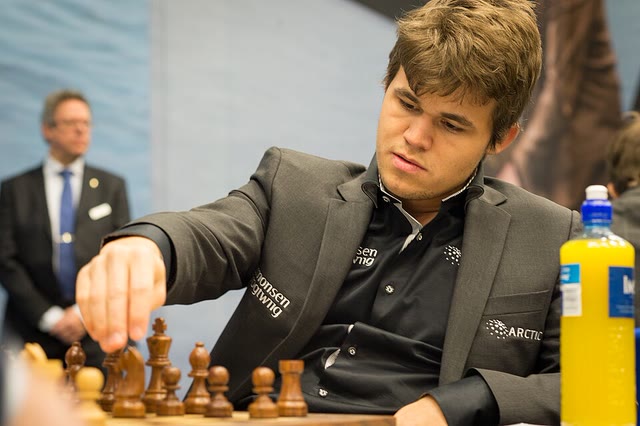
Chess has some amazing records: a tournament game that lasted 272 moves, a checkmate in just two moves, a grandmaster aged 12, and a rating of 2882 that nobody has matched since 2014. Here are the most important chess records, each with a date and a source. Records change, so we checked that each one is still current in November 2026.
Records at a glance
| Record | Holder | When |
|---|---|---|
| Longest tournament game | Fellowes vs Lalić, 272 moves | August 2024 |
| Fastest checkmate | Fool's Mate, 2 moves | Named in 1656 |
| Highest rating | Magnus Carlsen, 2882 | May 2014 |
| Longest unbeaten run at the top | Magnus Carlsen, 125 games | 2018–2020 |
| Youngest grandmaster | Abhimanyu Mishra, 12 years 4 months | June 2021 |
| Youngest world champion | Gukesh Dommaraju, 18 | December 2024 |
| Oldest world champion | Wilhelm Steinitz, 58 | 1894 |
| Longest world title match | Karpov vs Kasparov, 48 games | 1984–85 |
| Most opponents in one simul | Ehsan Ghaem Maghami, 604 | February 2011 |
| Biggest blindfold simul | Timur Gareyev, 48 boards | December 2016 |
Game records
The longest tournament game
For 35 years the answer was Nikolić vs Arsović, played in Belgrade on 17 February 1989. It lasted 269 moves and 20 hours 15 minutes, and ended in a draw. Guinness World Records has listed it for the most moves in a chess game. At the time, the 50-move rule applied: a player can claim a draw if 50 moves go by with no capture and no pawn move (see draws).
In August 2024, at the Kingston Invitational in London, Peter Lalić beat 12-year-old Billy Fellowes in 272 moves. It is the longest decisive FIDE-rated game on record, and it is three moves longer than the 1989 game. The venue closed at move 203, so the game was paused overnight and finished the next morning. Sources: The Spectator, ChessBase.
The longest world championship game
Game 6 of the 2021 World Championship in Dubai, Magnus Carlsen vs Ian Nepomniachtchi, lasted 136 moves and nearly eight hours. Carlsen won. Source: Wikipedia.
The fastest checkmate: Fool's Mate
The shortest possible game ends in checkmate after just two moves by each side. It only happens if White makes two terrible pawn moves that open the diagonal to the white king:
1.f3 e5 2.g4 Qh4#
The name "Fool's Mate" appears in an English chess book by Francis Beale as early as 1656. White cannot mate this fast: the same trap against Black needs one more move. Learn how mate works in the checkmate lesson. Source: Wikipedia: Fool's mate.
The longest possible game
Could a game go on forever? No. Under FIDE's rules since 2014, a game is drawn automatically after 75 moves by each player with no capture and no pawn move. Pawns only move forward and each piece can only be captured once, so these "reset" moves eventually run out. François Labelle, who has studied the mathematics of chess, worked out that the longest possible game is 8,848½ moves. If players claimed a draw under the 50-move rule at the first chance, the limit would be 5,898½ moves. Source: François Labelle.
How many chess games are possible?
In 1950 the American scientist Claude Shannon estimated that there are at least 10¹²⁰ possible chess games (a 1 followed by 120 zeros), based on about 1,000 choices for each pair of moves over a typical 40-move game. This "Shannon number" is far larger than the number of atoms in the observable universe, which is often put at about 10⁸⁰. The number of legal positions is much smaller but still huge: about 4.8 × 10⁴⁴, according to an estimate by John Tromp and Peter Österlund. This is why no computer can simply "solve" chess by checking every game; read more in chess and computers. Source: Wikipedia: Shannon number.
Rating records
The highest rating ever
Magnus Carlsen reached 2882 on FIDE's May 2014 list, and again in August 2019. That is the highest rating since FIDE adopted the Elo system in 1970. The previous record was Garry Kasparov's 2851 from July 1999. As of November 2026, FIDE lists Carlsen at 2823, still world No. 1. Read about Magnus Carlsen, or see what a good rating is. Sources: Wikipedia, FIDE top 100, November 2026.
The highest rating by a woman
Judit Polgár reached 2735 in July 2005. She is the only woman to pass 2700 and the only woman to reach the world top 10. As of November 2026, the highest-rated woman on FIDE's list is Hou Yifan at 2596. Sources: Wikipedia: Judit Polgár, FIDE top women, November 2026.
The longest unbeaten run at the top level
Magnus Carlsen played 125 classical games without a loss, from 31 July 2018 until 10 October 2020, when Jan-Krzysztof Duda beat him at Norway Chess. The run had 42 wins and 83 draws. It broke Ding Liren's record of 100 games (2017–2018), which had beaten Mikhail Tal's 95 games (1973–1974). Source: Wikipedia.
The longest time as world No. 1
Garry Kasparov was top of FIDE's rating list for 255 months in total, far more than anyone else. Source: Wikipedia.
Age records
The youngest grandmaster
Abhimanyu Mishra of the United States qualified for the grandmaster title in Budapest in June 2021, aged 12 years, 4 months and 25 days. He broke a record Sergey Karjakin had held since 2002. As of November 2026 the record still stands. Faustino Oro of Argentina came close: he earned his final grandmaster norm in May 2026 aged 12 years, 6 months and 26 days, which makes him the second-youngest ever, and FIDE confirmed his title in August 2026. For comparison, Bobby Fischer was 15 when he became a grandmaster in 1958. Sources: Wikipedia: Abhimanyu Mishra, Chess.com.
The youngest world champion
Gukesh Dommaraju of India won the world title in Singapore on 12 December 2024, aged 18, beating Ding Liren 7½–6½. He is the youngest undisputed world champion ever. Ruslan Ponomariov of Ukraine was a few months younger when he won FIDE's knockout championship in 2002, at a time when there were two rival world titles. Before Gukesh, the youngest undisputed champion was Garry Kasparov, who won the title at 22 in 1985. The youngest women's world champion is Hou Yifan, who was 16 when she won in 2010. As of November 2026 Gukesh is still champion, and he is due to defend his title against Javokhir Sindarov in Geneva at the end of 2026. Read about Gukesh. Sources: Wikipedia, Wikipedia: World Chess Championship 2024.
The oldest world champion
Wilhelm Steinitz, the first official world champion, was born on 14 May 1836 and kept the title until he lost to Emanuel Lasker on 26 May 1894. He was 58, older than any other world champion while holding the title. The 32-year age gap between Steinitz and Lasker is still the largest in any world championship match. Lasker went on to hold the title for 27 years (1894–1921), the longest reign of any champion. See all the world chess champions. Source: Wikipedia: World Chess Championship 1894.
Match records
The longest world championship match
The 1984–85 match between champion Anatoly Karpov and challenger Garry Kasparov in Moscow was played as "first to six wins". It began on 10 September 1984. Karpov won four of the first nine games and led 5–0 after game 27, but then he could not win the sixth game, and there were long runs of draws. After 48 games and five months, with Karpov leading 5–3 and 40 games drawn, the president of FIDE, Florencio Campomanes, stopped the match on 15 February 1985 without a result, saying the players' health was at risk. It remains the only title match ever stopped this way. A new match was played later in 1985, and Kasparov won it 13–11. The previous longest title match had been 34 games, Capablanca vs Alekhine in 1927. Source: Wikipedia: World Chess Championship 1984–1985.
Simultaneous and blindfold records
In a simultaneous exhibition (a "simul"), one strong player walks from board to board and plays many opponents at the same time.
Most opponents in one simul
On 8–9 February 2011, at a sports stadium in Tehran, the Iranian grandmaster Ehsan Ghaem Maghami played 604 opponents over 25 hours. He won 580 games, drew 16 and lost 8. Guinness World Records counts only opponents with a rating of at least 1200, so its entry for the same event lists 135 games. Sources: FIDE, Guinness World Records.
The best big-simul score belongs to José Raúl Capablanca, who in 1922 in Cleveland played 103 opponents and won 102 games, with one draw. Source: Wikipedia.
Most people playing at once
On 24 December 2010, about 20,000 people played chess at the same time in Ahmedabad, India, in an event attended by the then world champion Viswanathan Anand. Guinness World Records lists 20,480 players. Source: Guinness World Records.
The blindfold simul record
In a blindfold simul the player cannot see any of the boards: the moves are read out, and the player keeps every game in their head. In December 2016 in Las Vegas, Timur Gareyev played 48 blindfold games at once over about 20 hours, scoring 35 wins, 7 draws and 6 losses. That is still the official record. In May 2026 the Swedish grandmaster Axel Smith played 49 blindfold games in Lund, scoring 35 wins, 12 draws and 2 losses in more than 29 hours, but Chess.com reported that it was unlikely to be recognised as an official record, partly because some opponents took breaks during the event. Sources: Wikipedia, Chess.com.
Sources
- Wikipedia: List of world records in chess
- The Spectator: Marathon (Luke McShane, August 2024)
- ChessBase: A game that outlasted the day (5)
- François Labelle: The longest possible chess game
- FIDE: Top 100 players, November 2026
- Chess.com: Faustino Oro confirmed as grandmaster
- FIDE: World record 604-board simultaneous exhibition
- Wikipedia: World Chess Championship 1984–1985
Checked in November 2026.
Questions and answers
- What is the longest chess game ever played?
- The longest tournament game on record is Fellowes vs Lalić at the Kingston Invitational in London in August 2024, which Lalić won in 272 moves. Before that, the record was Nikolić vs Arsović, Belgrade 1989, a 269-move draw that lasted 20 hours 15 minutes.
- Who is the youngest grandmaster ever?
- Abhimanyu Mishra of the United States, who qualified in June 2021 at 12 years, 4 months and 25 days. As of November 2026 his record still stands; Faustino Oro of Argentina is the second-youngest.
- What is the highest chess rating ever?
- Magnus Carlsen's 2882, first reached on FIDE's May 2014 list. The highest rating ever reached by a woman is Judit Polgár's 2735, in July 2005.
- What is the fastest checkmate in chess?
- Fool's Mate: 1.f3 e5 2.g4 Qh4 is checkmate after only two moves by each side. It needs White to make two very weak pawn moves.
- How many possible chess games are there?
- Claude Shannon estimated in 1950 that there are at least 10 to the power of 120 possible games, far more than the number of atoms in the observable universe. There are about 4.8 times 10 to the power of 44 legal positions.
Play free now — no sign-up needed