 ChessMess
Deep Blue vs Kasparov: the day a computer beat the world champion
How IBM's Deep Blue beat Garry Kasparov in 1997: the 1996 and 1997 match results, how the machine worked, the decisive game 6, the cheating row and what it meant.
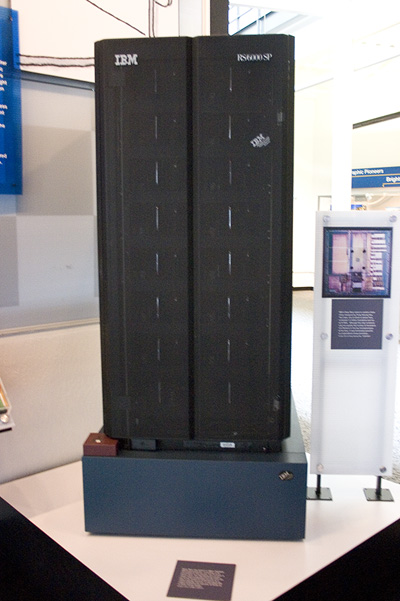
In May 1997, IBM's chess computer Deep Blue beat world champion Garry Kasparov 3½–2½ in a six-game match in New York. It was the first time a computer had beaten a reigning world champion in a match under normal tournament conditions. A year earlier, in 1996, Kasparov had won their first match 4–2, although Deep Blue won the very first game.
The two matches at a glance
| 1996 match | 1997 rematch | |
|---|---|---|
| Where | Philadelphia | New York |
| When | 10–17 February 1996 | 3–11 May 1997 |
| Result | Kasparov won 4–2 | Deep Blue won 3½–2½ |
| Games | Kasparov won 3, Deep Blue 1, 2 draws | Deep Blue won 2, Kasparov 1, 3 draws |
| Prize money | 400,000 dollars to the winner, 100,000 to the loser | 700,000 dollars to the winner, 400,000 to the loser |
In game 1 of 1996, Deep Blue became the first computer to beat a reigning world champion in a game with classical (slow) time controls. Kasparov then won three games and drew two. In 1997 Kasparov won game 1, Deep Blue won game 2, games 3, 4 and 5 were drawn, and Deep Blue won the deciding game 6.
How Deep Blue worked, in plain words
Where it came from. The project began in 1985 at Carnegie Mellon University in the United States, where a student, Feng-hsiung Hsu, built a chess machine called ChipTest. Its successor, Deep Thought, lost two games to Kasparov in 1989. Hsu and Murray Campbell then joined IBM, and the machine was renamed Deep Blue, a play on IBM's nickname "Big Blue". Grandmaster Joel Benjamin helped the team, and other grandmasters prepared its openings.
A giant calculator. Deep Blue was an IBM RS/6000 SP supercomputer with 30 general-purpose processors and 480 special chips built only for chess. Each chip held a tiny chessboard in its circuits to work out moves very fast.
Brute force. In 1997 Deep Blue could look at about 200 million positions every second, twice as many as the year before. It tried every move, every reply, every reply to that reply, and so on, usually six to eight moves ahead and sometimes twenty or more in forcing lines.
Judging positions. At the end of each line it gave the position a score using about 8,000 rules written with the help of strong players: material, king safety, control of the centre and so on. The weight of each rule was tuned using thousands of master games.
Books. For the opening it had a book of more than 4,000 positions and a database of 700,000 grandmaster games. For the endgame it had databases with every position of five pieces or fewer.
Deep Blue did not learn by itself. All its knowledge was put in by people. Modern engines are very different and far stronger: a free engine such as Stockfish, running on a phone, now plays better than Deep Blue ever did.
Game 6: the decisive game
On 11 May 1997 the score was level at 2½–2½. Kasparov had Black and chose the Caro-Kann Defence, an opening he rarely played, hoping to keep the computer away from its preparation. On move 7 he played 7...h6?, a move that allows a well-known knight sacrifice. Nobody knows for sure why. He may have mixed up the order of moves (the usual line is 7...Bd6 first and ...h6 a move later), or he may have hoped that a computer would not give up a knight without a clear gain.
Deep Blue sacrificed at once with 8.Nxe6!. This sacrifice had already been played in grandmaster games, with good results for White.
After 8...Qe7 9.O-O fxe6 10.Bg6+ Kd8 11.Bf4, White had only a pawn for the knight, but Black's king was stuck in the centre and could no longer castle, and the black queen blocked its own bishop. Kasparov's 11...b5 was the first new move of the game. Deep Blue opened lines on the queenside with 12.a4 and 15.axb5, brought its queen to d3, and with 17.Bf5! forced Kasparov to give up his queen for a rook and a bishop. After 19.c4, Kasparov resigned. The game had lasted only 19 moves and a little over an hour.
Full game: 1.e4 c6 2.d4 d5 3.Nc3 dxe4 4.Nxe4 Nd7 5.Ng5 Ngf6 6.Bd3 e6 7.N1f3 h6 8.Nxe6 Qe7 9.O-O fxe6 10.Bg6+ Kd8 11.Bf4 b5 12.a4 Bb7 13.Re1 Nd5 14.Bg3 Kc8 15.axb5 cxb5 16.Qd3 Bc6 17.Bf5 exf5 18.Rxe7 Bxe7 19.c4 1-0
You can replay it on the analysis board and see what a modern engine thinks of each move.
The controversy
Kasparov was shocked by game 2. Instead of grabbing pawns, as computers of the time usually did, Deep Blue played calm positional moves, 36.axb5! and 37.Be4!, that seemed too human for a machine. Kasparov suggested that a strong human player might have helped the computer during the game. IBM denied this. It said people had only changed the program between games, which the rules allowed. To make things worse, Kasparov later learned that he had resigned game 2 in a position where he could have forced a draw by perpetual check.
Kasparov asked to see the computer's printouts (its logs). IBM refused at the time, although it later published them online. Kasparov asked for a third match; IBM declined and retired Deep Blue. The story was retold in the 2003 documentary Game Over: Kasparov and the Machine.
Years later, after studying the games again for a book, Kasparov said he had more respect for the Deep Blue team, and a lower opinion of both his own play and the machine's play than before.
What it meant
Deep Blue's win was seen around the world as a sign that computers were catching up with human thinking. Others pointed out that Deep Blue won mainly by speed, not by understanding. After 1997 the board game Go became the new challenge for computers, until the program AlphaGo beat the top player Lee Sedol in 2016.
For chess players, the match changed how the game is studied. Engines became training partners, and today anyone can analyse their games with an engine much stronger than Deep Blue. One of Deep Blue's two cabinets is now kept at the Smithsonian's National Museum of American History in Washington, and the other at the Computer History Museum in California. Read the bigger story in chess and computers, and more about Garry Kasparov.
Sources
- Wikipedia: Deep Blue versus Garry Kasparov
- Wikipedia: Deep Blue (chess computer)
- Wikipedia: Deep Blue versus Kasparov, 1997, Game 6
- IBM: Deep Blue
Checked in November 2026.
Questions and answers
- Who won Deep Blue vs Kasparov?
- Kasparov won the first match in Philadelphia in February 1996 by 4–2. Deep Blue won the rematch in New York in May 1997 by 3½–2½, the first match win by a computer against a reigning world champion.
- How fast was Deep Blue?
- In 1997 Deep Blue could examine about 200 million chess positions per second, using 480 special chess chips. It usually looked six to eight moves ahead, and sometimes much further.
- Did IBM cheat against Kasparov?
- Kasparov suspected that a human helped the computer during game 2. IBM denied it, saying people only changed the program between games, which the rules allowed, and it later published the computer's logs.
- Where is Deep Blue now?
- Deep Blue was made of two cabinets. One is at the Smithsonian's National Museum of American History in Washington, and the other is at the Computer History Museum in California.
- How long was the last game of Deep Blue vs Kasparov?
- Game 6 of the 1997 match lasted only 19 moves and a little over an hour before Kasparov resigned.
Play free now — no sign-up needed