 ChessMess
How the rules of chess changed: queens, castling, stalemate and more
From the weak medieval queen to the 75-move rule: when castling, en passant, promotion, stalemate and the draw rules took their modern form.
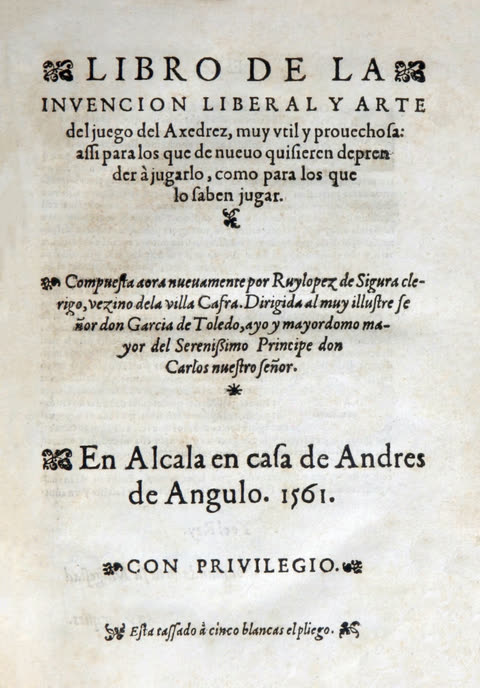
The king, the rook and the knight move just as they did when chess began some 1,500 years ago, but almost everything else has changed. The queen and the bishop got their long moves in Spain around 1475–1500. Castling, en passant, promotion and stalemate each had different local versions for centuries, and some only settled in the 1800s. The newest rules, automatic draws after a fivefold repetition or 75 moves, arrived in 2014.
Quick timeline
| Rule | When it settled | Before that |
|---|---|---|
| Queen moves any distance, straight or diagonal | Spain, about 1475–1500 | One square diagonally |
| Bishop moves any distance diagonally | Spain, about 1475–1500 | Jumped exactly two squares diagonally |
| Pawn may move two squares on its first move | Between the 1200s and 1500s | One square only |
| En passant | Known in Spain in the 1500s; Italy only in 1880 | Pawns could slip past enemy pawns safely |
| Castling in one move | France about 1620, England about 1640 | A king's "leap", castling in two moves, or "free castling" |
| Promote to any piece, even a second queen | Mid to late 1800s | Medieval: only to the weak queen. 1700s: only to a piece already lost |
| Stalemate is a draw | All of Europe by the 1800s | A win, half a win or even a loss, depending on the place |
| Checkmate is the only way to win on the board | Between 1200 and 1600 | Capturing everything but the king (a "bare king") also won |
| Fifty-move rule for every position | By 2001 | 24, 60, 70 or 75 moves; longer limits for some endgames |
| Threefold repetition | Late 1800s | Up to six repetitions |
| Automatic draw after fivefold repetition or 75 moves | FIDE, 1 July 2014 | A draw only if a player claimed it |
The medieval game
Before about 1475 Europeans played a game close to shatranj, the chess of the Arab and Persian world. The piece beside the king, the fers (which became the queen), moved only one square diagonally, though in some places it could jump two squares on its first move. The bishop, which began as an elephant, hopped exactly two squares diagonally. Pawns moved one square at a time and could only become a fers when they reached the far side. The names of the pieces have their own story, told in chess pieces: names and history.
The big change: queen and bishop
In the late 1400s, probably first in the Kingdom of Valencia in Spain, the queen became able to move any distance like a rook or a bishop, and the bishop could slide along its whole diagonal. The oldest game with the new moves is in a Valencian poem, Scachs d'amor, usually dated to about 1475. Luis Ramírez de Lucena's book, printed in Salamanca around 1497, is the oldest known printed book of chess rules. The full story is in the birth of modern chess.
The pawn's double step and en passant
To speed up the start of the game, pawns gained the right to move two squares on their first move, some time between the 1200s and the 1500s. That created a problem: a pawn could now jump straight past an enemy pawn that would have captured it. The answer was en passant, French for "in passing". If a pawn moves two squares and lands right beside an enemy pawn, that enemy pawn may capture it as if it had moved only one square, but only on the very next move.
Ruy López already wrote about en passant in the 1500s. Italy, however, long played without it: there a pawn could pass freely, a custom called passar battaglia. Italy only adopted en passant in 1880, to prepare for an international tournament in Milan in 1881. Learn how it works in our en passant lesson.
One detail was argued about in the 1800s: if capturing en passant is your only legal move, do you have to play it, or is it stalemate? Howard Staunton wrote in 1860 that you must play it, and the rules were later changed to make that clear.
Castling: many versions before one
Medieval kings had a "king's leap": once in a game the king could jump, either like a knight or two squares. When the queen and bishop became long-range attackers, the king needed a quicker way to safety, and different places found different answers. In medieval England, Spain and France the white king could jump to one of several squares (c1, c2, d3, e3, f3 or g1), as long as it was not in check. In Lucena's time castling took two separate moves: first the rook, then the king.
Castling as one move, the modern way, appeared in France around 1620 and in England around 1640. In Rome, players used "free castling" from the early 1600s until the late 1800s: the rook could go to almost any square up to the king, and the king to any square on the other side of the rook. The short way of writing castling, 0-0, was introduced by Johann Allgaier in 1811, and 0-0-0 for castling on the queen's side by Aaron Alexandre in 1837.
Today the king moves two squares towards a rook, and the rook jumps over to the square next to it. Neither piece may have moved before, the squares between them must be empty, and the king may not be in check, pass through an attacked square or land on one. See our castling lesson.
In the Opera Game, Paul Morphy castled on the queen's side to bring his rook into the attack at once, a good example of why castling is about more than safety.
Promotion: from the weakest piece to any piece
In the medieval game a pawn that reached the far side could only become a fers, the weak one-square piece. Once the queen became powerful, some players disliked the idea that a king could end up with two queens. In Italy in the 1700s and early 1800s, and in Philidor's famous book of 1749, a pawn could only be promoted to a piece its owner had already lost. If nothing had been captured, the pawn simply waited on the last row.
Jacob Sarratt's rules of 1828 allowed promotion to any piece, and this became usual by the middle of the 1800s. A British code of 1862 even let a pawn on the last row stay a pawn. It was widely rejected, and the rules used at London 1883 made promotion compulsory. Today a pawn must become a queen, rook, bishop or knight of its own colour, and you can have as many queens as you manage to make.
Stalemate: win, half-win, loss, then draw
Stalemate means the player to move is not in check but has no legal move. Today it is a draw. For most of chess history it was not:
- In shatranj, stalemating your opponent was a win. Spain still played that way in the early 1400s.
- Lucena (around 1497) counted it as half a win: in a game played for money, the stalemating player won only half the stake. Spain kept this until about 1600.
- In England from about 1600 to 1800 it was the other way round: the player who gave stalemate lost. Hoyle's popular games book was still printing this rule in 1866.
- Some medieval French sources say the stalemated player simply missed a turn.
- In several Asian forms of chess, such as Burmese chess, giving stalemate was simply not allowed.
- Italy already treated stalemate as a draw in the 1200s, and so did a German poem of 1422. That rule spread across Europe. Jacob Sarratt brought it to England in the early 1800s, and the old English rule had gone there before 1820.
The puzzle maker Sam Loyd found this game, only ten moves long: 1.e3 a5 2.Qh5 Ra6 3.Qxa5 h5 4.Qxc7 Rah6 5.h4 f6 6.Qxd7+ Kf7 7.Qxb7 Qd3 8.Qxb8 Qh7 9.Qxc8 Kg6 10.Qe6. Black still has most of the pieces, yet none of them can move. Our draws lesson shows how to avoid giving stalemate by accident.
The bare king rule
In shatranj you could also win by capturing all your opponent's pieces except the king, leaving a "bare king". Between 1200 and 1600 European chess dropped this, and checkmate became the only way to win on the board. Today a lone king is not lost at all. It can even save the game: if the other side has only a king and one bishop or one knight left, checkmate is impossible and the game is drawn at once.
Fifty moves and repetition
Some draw rules exist simply to stop games going on forever.
The fifty-move rule goes back to Ruy López's book of 1561. Today, if each player has made 50 moves in a row with no capture and no pawn move, a player can claim a draw. Over the years writers suggested other numbers: Pietro Carrera wanted 24 and La Bourdonnais 60. In the 1900s, analysis found endgames that need more than 50 moves to win, so FIDE allowed longer limits for some of them, from 1928, then 100 moves from 1984 and 75 from 1989. In the 1980s computers found many more such endgames. FIDE later dropped the exceptions, and by 2001 the rule was a plain 50 moves for every position.
Threefold repetition: if the same position appears three times, the player to move can claim a draw. Early versions were different. The rules of London 1883 spoke of a series of moves repeated three times, and the 1886 world championship match required the same series to be repeated six times. Soon afterwards the rule was based on positions and three repetitions.
Automatic draws since 2014. Under both rules above, the game is only drawn if a player claims it. Since 1 July 2014 FIDE's Laws say the game is drawn automatically, with no claim needed, if the same position appears five times, or if each player makes 75 moves without a capture or a pawn move (unless the last move is checkmate).
Touch-move, White first, and good manners
Some rules are about behaviour rather than moves. The touch-move rule (if you deliberately touch one of your pieces, you must move it) is already in Lucena's book of 1497. For a long time a player who made an illegal move could be forced to move the king instead. In a game at Kiel in 1893, after 1.e4 d5 2.exd5 Qxd5, White put a bishop on a square it could not reach, was made to play 3.Ke2 instead, and was mated at once by 3...Qe4.
Even the rule that White always moves first is quite new. In the early 1800s many players took the black pieces and still moved first, and the custom only became fixed in the late 1800s.
Clocks and phones
For centuries there was no time limit at all. In an 1834 match Alexander McDonnell sometimes thought for up to an hour and a half over one move. Sandglasses were used in 1861, mechanical chess clocks at London 1883, and the increment (a few seconds added after each move), patented by Bobby Fischer, from 1992. Since 2014 FIDE's Laws have forbidden players to have a phone or other electronic device in the playing area during a game.
Who writes the rules
Until the 1800s each country, and often each club, had its own rules. Philidor's rules of 1749 were widely used. Later, Staunton's Chess Praxis (1860) was accepted in English-speaking countries, while German players followed the Handbuch des Schachspiels, first published in 1843. FIDE was founded in 1924 and in 1928 began writing one set of Laws of Chess for international play. English became the official language of the Laws in 1974. As of November 2026, the FIDE Laws in force are the ones that took effect on 1 January 2023.
Sources
- FIDE Laws of Chess taking effect from 1 January 2023 (FIDE Handbook)
- FIDE Laws of Chess for competitions from 1 July 2014 (FIDE Handbook)
- Rules of chess: history and codification (Wikipedia)
- Stalemate: history of the stalemate rule (Wikipedia)
- Castling: history (Wikipedia)
- En passant: history (Wikipedia)
- Fifty-move rule: history (Wikipedia)
- Threefold repetition: history of the rule (Wikipedia)
Checked in November 2026.
Questions and answers
- When did the queen become the most powerful chess piece?
- In the late 1400s, probably first in Spain, between about 1475 and 1500. Before that the queen could move only one square diagonally.
- Was stalemate always a draw in chess?
- No. In the old Arab game shatranj it was a win for the player who gave it, in Spain around 1500 it was half a win, and in England from about 1600 to 1800 the player who gave stalemate lost. It became a draw everywhere in Europe in the 1800s.
- When was en passant added to chess?
- It came with the pawn's two-square first move, which appeared some time between the 1200s and the 1500s. Ruy López wrote about it in the 1500s, but Italy only adopted en passant in 1880.
- What is the 75-move rule in chess?
- Since 1 July 2014, FIDE's Laws say a game is drawn automatically if each player has made 75 moves without any capture or pawn move, unless the last move is checkmate. Under the older 50-move rule a player has to claim the draw.
- When did castling become one move?
- In France around 1620 and in England around 1640. In Italy, different castling rules, including free castling, lasted until the late 1800s.
Play free now — no sign-up needed