 ChessMess
Judit Polgár: the strongest woman in chess history
Judit Polgár reached No. 8 in the world and a 2735 rating, the best ever by a woman. How she took on the world's best, and how she beat Kasparov.
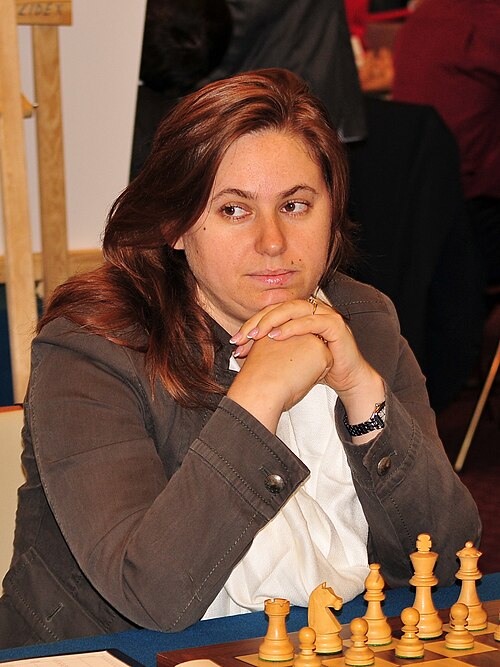
Judit Polgár is the strongest woman chess player in history. She reached a rating of 2735 on FIDE's July 2005 list and climbed as high as No. 8 in the world, the only woman ever to enter the overall top ten. She chose to play against the best players from the start, never played for the Women's World Championship, and beat several world champions, including Garry Kasparov.
The Polgár sisters
Judit was born on 23 July 1976 in Budapest, Hungary, the youngest of three sisters. Her father, László Polgár, believed that talent can be built through early, focused training. His motto was "Geniuses are made, not born." He and his wife Klára taught their daughters at home, with chess as the main subject. All three became strong players: Susan became a grandmaster and later women's world champion, and Sofia became an international master. Judit went furthest of all.
A prodigy among the best
Judit rose at astonishing speed. On FIDE's January 1989 list, aged 12, she was already No. 55 in the world and the highest-rated woman. In December 1991 she won the Hungarian Championship and became a grandmaster, the highest title in chess, at 15 years and 4 months. That was about a month younger than Bobby Fischer had been, which made her the youngest grandmaster ever at that time.
She rarely played in women's events. Instead she entered open tournaments against the world's best. In 1993 she beat former world champion Boris Spassky in a match, and in 1994 she won a strong tournament in Madrid.
In the world top ten
By April 2003 she was in the world top ten, and in 2004 and 2005 she reached No. 8 on FIDE's lists. In 2005 she became the first woman to play in the final stage of a world championship, an eight-player tournament in San Luis, Argentina. She finished last there, but simply qualifying was historic. She was the top-rated woman in the world for about 25 years, from January 1989 until after she retired from competitive chess in 2014.
Along the way she beat many champions. Besides Spassky, she won a rapid match against Anatoly Karpov in 1998, when he was FIDE world champion, and in 2002 she finally beat Kasparov.
How Polgár played
Polgár was an attacking player. She loved sharp, open positions where she could calculate concrete lines and go after the enemy king, and many of her wins end with a direct attack. But she could also be patient and grind, as her most famous win shows.
Famous game: Polgár vs Kasparov, Moscow 2002
In September 2002 Polgár played for a "Rest of the World" team against Russia in Moscow. The games were rapid: 25 minutes per player, plus 10 seconds for each move. Kasparov, the world No. 1, answered her Ruy Lopez with the Berlin Defence, a line in which the queens come off early. It was the same defence Vladimir Kramnik had used to take Kasparov's title two years before. The queens were traded on move 8, and the game turned into a long, slow fight.
Polgár improved her pieces step by step. On move 18 her knight landed on f5, a strong square in the middle of Black's position.
She kept up the pressure, opened the position and brought both rooks to the seventh rank, the second row from Black's side, where they attacked Black's pawns and king. After 42...Kc8, with her rooks on b7 and g7, Kasparov resigned.
It was her first win against Kasparov, and the Rest of the World won the whole match 52–48. To see why rooks on the seventh rank are so strong, try our lesson on open files and the seventh rank, then replay the game on the analysis board.
Legacy
Polgár proved that a woman could compete with, and beat, the very best players in the world. After retiring she turned to teaching. Her Chess Palace programme uses chess to help young schoolchildren learn, and it became part of Hungary's national curriculum. In 2015 she also became captain of Hungary's national men's team. For the story of the women's title she chose not to chase, see our page on women's world chess champions, and for her greatest opponent, see Garry Kasparov.
Sources
- Judit Polgár, Wikipedia
- Judit Polgár, FIDE rating profile and ranking history
- 20 years ago: Russia vs The Rest of the World, ChessBase, 2022 (score of Polgár vs Kasparov, Moscow 2002)
Checked in November 2026.
Questions and answers
- Is Judit Polgár the best female chess player ever?
- By rating and results, yes. Her peak FIDE rating of 2735 (July 2005) is the highest any woman has reached, and she is the only woman who has been in the overall world top ten.
- Did Judit Polgár ever beat Kasparov?
- Yes. She beat him in a rapid game in Moscow on 9 September 2002, during the Russia vs Rest of the World match. It was her first win against him.
- Why didn't Judit Polgár play for the Women's World Championship?
- She preferred to test herself against the strongest players in open events, so she never entered the women's championship. She wanted to compete with the best, whoever they were.
- How old was Judit Polgár when she became a grandmaster?
- She was 15 years and 4 months old, in December 1991. That broke Bobby Fischer's record as the youngest grandmaster at the time.
Play free now — no sign-up needed