 ChessMess
Vera Menchik: the first Women's World Chess Champion
Vera Menchik (1906–1944) was the first Women's World Chess Champion, from 1927 until her death, and beat many leading men, including Max Euwe.
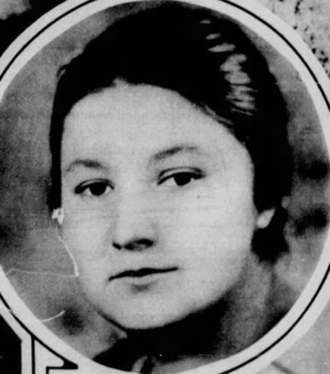
Vera Menchik (1906–1944) was the first Women's World Chess Champion. She won the title in 1927 and kept it until her death in 1944, losing only one game in seven championship tournaments. She was also the first woman to be invited regularly to top men's tournaments, and she beat several of them, including Max Euwe, who later became world champion.
From Moscow to Hastings
Menchik was born on 16 February 1906 in Moscow. Her father was Czech and her mother was English. Her father taught her chess when she was nine. After the Russian Revolution the family lost its home and business, and in 1921 her parents separated. Her mother took Vera and her younger sister Olga to England, to St Leonards-on-Sea, next to the seaside town of Hastings.
Vera spoke little English at first, and chess became her way into her new life. She joined the Hastings Chess Club and took lessons from the famous Hungarian master Géza Maróczy, who taught her solid, positional chess.
The first Women's World Champion
In 1927 a women's tournament was held in London alongside the Chess Olympiad. It became the first Women's World Championship, and Menchik won it with 10½ points out of 11. She then won every championship until the Second World War: Hamburg 1930, Prague 1931, Folkestone 1933, Warsaw 1935, Stockholm 1937 and Buenos Aires 1939. In those seven tournaments she lost just one game. She also beat her main rival, Sonja Graf, in matches in 1934 and 1937.
Playing the men, and the "Menchik Club"
There were almost no other women's events, so Menchik played in men's tournaments. In 1929 she was invited to Carlsbad, one of the strongest tournaments of the time. Some masters laughed at the idea. Hans Kmoch promised to go on stage as a ballet dancer if she scored more than three points. She finished last, but with exactly three.
The most famous joke is the Vera Menchik Club. As the story is usually told, the Viennese master Albert Becker suggested at Carlsbad that every master who lost to her should become a member, and then became the first member himself when she beat him. Be careful with this story: the chess historian Edward Winter could not find it in reports from 1929, and it appears in print only much later. What is certain is that the joke soon caught on. In February 1931 the British Chess Magazine wrote that Sir George Thomas, after losing to her yet again, was now the president of the Menchik club.
Later members included Max Euwe, Sultan Khan, Edgard Colle and Samuel Reshevsky. In 1929 she also shared second place at Ramsgate with Akiba Rubinstein, half a point behind Capablanca and ahead of her teacher Maróczy. Against the very best she had no luck: she never beat Capablanca or Alekhine.
Her style
Menchik played calm, solid chess, built on the positional lessons she learned from Maróczy. Writers of her time thought her openings and endgames were her strongest points, and she was a stubborn defender. Her weak spot was the clock: she sometimes ran short of time at important moments.
Famous game: Euwe vs Menchik, Hastings 1930/31
On 30 December 1930, in the second round of the Hastings Christmas tournament, Menchik had Black against Max Euwe, the champion of the Netherlands, who would become world champion in 1935. Euwe attacked on the queenside, but she defended calmly, and after many exchanges they reached an endgame with a bishop and pawns each. The position was level, but Euwe pushed for a win. His king went off to eat pawns on the kingside, and that left Menchik's b-pawn free to run.
It was Euwe's only defeat in the tournament, which he still won, and the British Chess Magazine called it a sensation. A year later, at Hastings 1931/32, she beat Euwe again, and Sultan Khan as well. Endgames like this are a great way to learn about passed pawns and bishop endgames.
The moves: 1.d4 Nf6 2.c4 e6 3.Nc3 d5 4.Bg5 Nbd7 5.e3 Be7 6.Nf3 O-O 7.Rc1 a6 8.cxd5 exd5 9.Bd3 c6 10.O-O Ne4 11.Bf4 Nxc3 12.Rxc3 Re8 13.Qb1 Nf8 14.b4 Ng6 15.Bg3 Bd6 16.a4 Bxg3 17.hxg3 Bd7 18.Rfc1 Qf6 19.b5 axb5 20.axb5 Rec8 21.Qc2 Qd8 22.bxc6 Rxc6 23.Rc5 Rxc5 24.dxc5 Ra5 25.Qb2 Qa8 26.Qb6 Nf8 27.Ne5 Ra1 28.Rb1 Rxb1+ 29.Bxb1 Be6 30.Kh2 Nd7 31.Nxd7 Bxd7 32.Qc7 Qc8 33.Qxc8+ Bxc8 34.Ba2 Be6 35.Kg1 Kf8 36.Kf1 Ke7 37.Ke2 Kf6 38.Kd3 Ke5 39.g4 g5 40.g3 Bxg4 41.f4+ gxf4 42.gxf4+ Kf6 43.Bxd5 Bc8 44.Bf3 Ke7 45.Kc4 Kd8 46.Kd5 b6 47.c6 Kc7 48.Ke5 Be6 49.f5 Bb3 50.Kf6 b5 51.Kg7 b4 52.Kxh7 Bc2 53.Kg7 b3 54.Bd5 b2 55.Ba2 Kxc6 56.f6 Kd6 57.e4 Bxe4 58.Kxf7 Bd5+ 59.Bxd5 b1=Q 60.Kg7 Qg1+ 61.Kf8 Kxd5 0-1
Replay the whole game on the analysis board.
A life cut short
In 1937 Menchik married Rufus Stevenson and became a British citizen. During the Second World War she stayed in London. On 26 June 1944 a German V-1 flying bomb hit her home in Clapham, south London, killing Vera, her mother and her sister Olga. She was 38 and still world champion.
Legacy
Menchik proved that a woman could compete with the world's best masters at a time when many doubted it. Since 1957 the trophy for the winning team at the Women's Chess Olympiad has been called the Vera Menchik Cup. Read about the champions who came after her on our women's world chess champions page, and about Judit Polgár, who decades later competed with the best men in the world.
Sources
- Vera Menchik, Wikipedia
- Vera Menchik, World Chess Hall of Fame
- The Vera Menchik Club by Edward Winter, Chess Notes
- Born 120 years ago today: Vera Menchik and her quiet revolution by André Schulz, ChessBase, February 2026 (also the source of the game score)
- Hastings 1930/31, BritBase (with the British Chess Magazine report of February 1931)
- Hastings 1931/32, BritBase
Checked in November 2026.
Questions and answers
- Who was the first Women's World Chess Champion?
- Vera Menchik. She won the first Women's World Championship in London in 1927 and held the title until she died in 1944.
- What was the Vera Menchik Club?
- A joke name for the male masters who lost to Menchik. The usual story says Albert Becker suggested it at Carlsbad 1929 and then became its first member, but that story only appears in print much later. By 1931 the British Chess Magazine was already using the name.
- Did Vera Menchik beat a world champion?
- She beat Max Euwe twice at Hastings, in 1930/31 and 1931/32, a few years before he became world champion in 1935. She never beat Capablanca or Alekhine.
- How did Vera Menchik die?
- She was killed in London on 26 June 1944, when a German V-1 flying bomb hit her home in Clapham. Her mother and her sister Olga also died.
Play free now — no sign-up needed