 ChessMess
Alexander Alekhine: the attacking world chess champion
Alexander Alekhine (1892–1946) beat Capablanca in 1927 and is the only world chess champion who died holding the title. His life, style and best ideas.
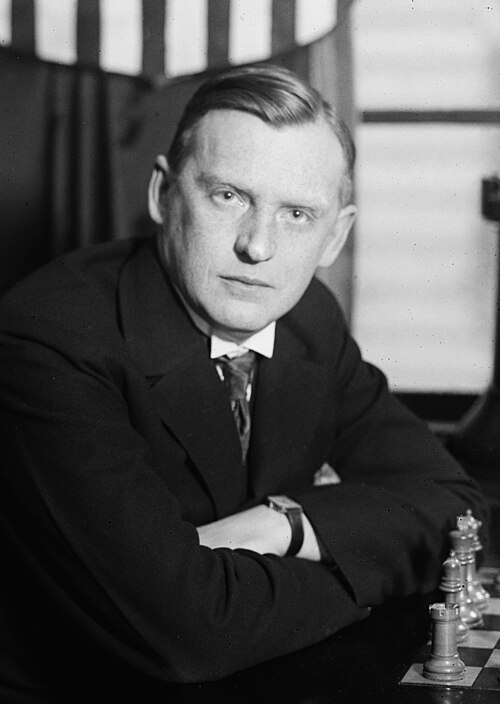
Alexander Alekhine (1892–1946) was the fourth world chess champion and one of the greatest attacking players of all time. He took the title from José Raúl Capablanca in 1927, lost it to Max Euwe in 1935 and won it back in 1937. He is the only world champion who died while still holding the title.
From Moscow to Paris
Alekhine was born on 31 October 1892 in Moscow, into a rich family. He was already a strong player as a teenager, and in 1914 he finished third at the great St Petersburg tournament, behind Emanuel Lasker and Capablanca. Later that year he was leading a tournament in Mannheim, Germany, when the First World War began, and he was held in Germany for a time before he could return to Russia.
The years after the Russian Revolution were dangerous for him. In 1919 he was arrested in Odessa on suspicion of spying, but he survived. In 1921 he left Soviet Russia for good and settled in France, which became his home, and in 1927 he became a French citizen. Meanwhile he worked towards one goal: a title match with Capablanca.
The 1927 match against Capablanca
The match was played in Buenos Aires, Argentina, from September to November 1927. Before it began, Alekhine had never beaten Capablanca in a single game. After 34 hard games he won with 6 wins, 3 losses and 25 draws. It remained the longest world championship match until 1984. The two never played a rematch.
Champion, ex-champion, champion again
Alekhine defended his title twice against Efim Bogoljubov, in 1929 and 1934. In the early 1930s he was at his very best, winning tournaments such as San Remo 1930 and Bled 1931 by huge margins. He also set records in blindfold chess, playing without seeing the boards: in Chicago in 1933 he took on 32 opponents at once.
In 1935 he lost the title to the Dutch player Max Euwe, but he won the return match in 1937. His last years are a dark chapter. During the Second World War he played in tournaments in Nazi-occupied Europe, and in 1941 antisemitic articles appeared under his name in a newspaper. He later said the articles had been changed by others; whether he wrote them has never been fully settled. He died in a hotel room in Estoril, Portugal, on 24 March 1946, usually said to be of a heart attack, still world champion.
How Alekhine played
Alekhine is remembered for fierce, imaginative attacks and long, deep combinations. But he was much more than an attacker. He prepared his openings carefully, understood positional play and was a fine endgame player. The opening 1.e4 Nf6, in which Black's knight invites White's pawns forward so they can be attacked later, is called the Alekhine Defence after him.
Famous game: Alekhine vs Nimzowitsch, San Remo 1930
This game is not a wild attack but a slow squeeze. Aron Nimzowitsch, one of the deepest thinkers in chess, chose the French Defence. Alekhine grabbed space on the queenside, opened the c-file and pinned a black knight on c6, so it could not move without losing something bigger behind it. Then he lined up both rooks and his queen on the c-file, one behind the other. This set-up is now known as "Alekhine's gun".
By the end, Black's pieces were tied down so completely that almost any move would lose material. A position where having to move is the problem is called zugzwang. Nimzowitsch resigned after 30.h4, a quiet pawn move that simply waited for him to run out of moves.
The moves: 1.e4 e6 2.d4 d5 3.Nc3 Bb4 4.e5 c5 5.Bd2 Ne7 6.Nb5 Bxd2+ 7.Qxd2 O-O 8.c3 b6 9.f4 Ba6 10.Nf3 Qd7 11.a4 Nbc6 12.b4 cxb4 13.cxb4 Bb7 14.Nd6 f5 15.a5 Nc8 16.Nxb7 Qxb7 17.a6 Qf7 18.Bb5 N8e7 19.O-O h6 20.Rfc1 Rfc8 21.Rc2 Qe8 22.Rac1 Rab8 23.Qe3 Rc7 24.Rc3 Qd7 25.R1c2 Kf8 26.Qc1 Rbc8 27.Ba4 b5 28.Bxb5 Ke8 29.Ba4 Kd8 30.h4 1-0
You can replay the squeeze on the analysis board.
Legacy
Alekhine won some of the most one-sided tournament victories ever and left behind hundreds of brilliant games and notes. His imaginative play inspired generations of players, and several openings carry his name. Follow the line of title holders from Steinitz to today on our world chess champions page.
Sources
- Alexander Alekhine, Wikipedia
- Alexander Alekhine, World Chess Hall of Fame
- At the height of his career: Alekhine wins San Remo 1930, ChessBase (tournament report and game score)
- Alekhine's gun, Wikipedia
Checked in November 2026.
Questions and answers
- Which world chess champion died holding the title?
- Alexander Alekhine. He was still world champion when he died in Estoril, Portugal, on 24 March 1946. He is the only champion to die while holding the title.
- How did Alekhine beat Capablanca?
- In a long match in Buenos Aires in 1927. Alekhine won 6 games, lost 3 and drew 25, even though he had never beaten Capablanca in a game before the match.
- What is Alekhine's gun?
- Two rooks lined up on one file with the queen behind them. The name, given by the writer Jeremy Silman, comes from Alekhine's win against Nimzowitsch at San Remo 1930.
- What is the Alekhine Defence?
- The opening 1.e4 Nf6, named after Alekhine. Black's knight invites White's pawns forward, planning to attack them once they have advanced.
Play free now — no sign-up needed