 ChessMess
Anatoly Karpov: the boa constrictor of world chess
Anatoly Karpov was world champion from 1975 to 1985 and FIDE champion in the 1990s. His squeezing style, his rivalry with Kasparov and his best game.
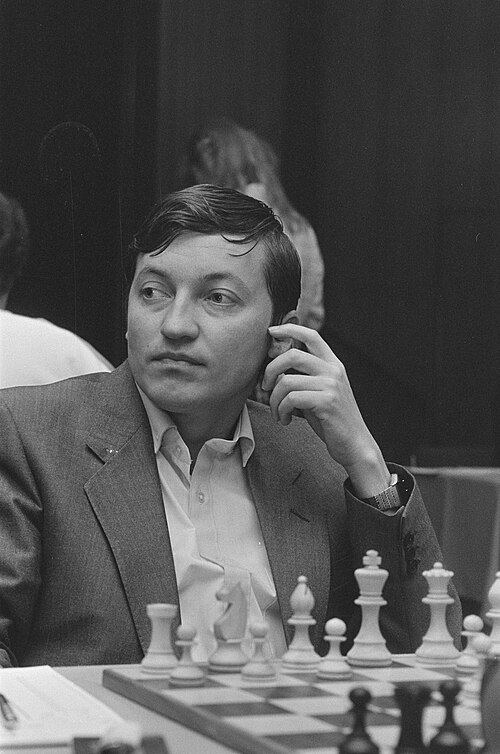
Anatoly Karpov was the 12th world chess champion, from 1975 to 1985, and FIDE world champion again from 1993 to 1999. He won without fireworks. Karpov collected small advantages, took away every chance of counterplay, and slowly squeezed his opponents until they had no good moves left. That is why writers compared him to a boa constrictor, the snake that crushes its prey. For 25 years in a row, from 1974 to 1998, he was either world champion or a challenger for the title.
Early years
Karpov was born on 23 May 1951 in Zlatoust, a steel town in the Ural Mountains of Russia, then part of the Soviet Union. He learned chess at four. At 12 he was accepted into the chess school of former world champion Mikhail Botvinnik, and the homework there helped him improve quickly. In 1969 he won the World Junior Championship, for players under 20, and in 1970 he became a grandmaster.
Champion without a match
Karpov won the Candidates matches of 1973–75, the knockout matches that decide the challenger. He beat Lev Polugaevsky, former champion Boris Spassky and Viktor Korchnoi. That earned him a match against Bobby Fischer. But Fischer and FIDE could not agree on the rules, and on 3 April 1975 FIDE declared Karpov world champion without a game being played.
Karpov then showed he was a worthy champion by winning tournament after tournament; over his career he took more than 160 first places. He defended his title twice against Korchnoi: in 1978 in Baguio, the Philippines (six wins to five, with 21 draws), and in 1981 in Merano, Italy (11–7).
The great rivalry with Kasparov
In 1984 a young challenger arrived: Garry Kasparov. Their first match was played until one player won six games. Karpov led 4–0 after nine games and 5–0 after 27. Then came a record run of draws, and Kasparov won games 32, 47 and 48. In February 1985, with the score 5–3, the FIDE president stopped the match after 48 games, saying the players were exhausted. The decision was controversial, and both players said they wanted to go on.
A new match was held later in 1985, and Kasparov won it 13–11. They met again for the title in 1986, 1987 and 1990, and each time Kasparov kept it by a small margin; the 1987 match in Seville ended 12–12. In their five world championship matches they played 144 games. Kasparov won 21, Karpov won 19, and 104 were drawn.
FIDE champion again
In 1993 Kasparov played his title match outside FIDE, so FIDE held its own championship. Karpov beat Jan Timman and became FIDE world champion again. He defended that title against Gata Kamsky in 1996 and Viswanathan Anand in 1998. In 1994 he also won the very strong Linares tournament with 11 points out of 13, unbeaten and 2½ points ahead of Kasparov. His highest rating was 2780, on FIDE's July 1994 list, and he was world No. 1 for 102 months in total.
How Karpov played
Karpov's style was positional. That means he cared most about where the pieces and pawns stand: which squares are strong, which pawns are weak, which pieces have nothing to do. He rarely took big risks. He made small, useful moves and, above all, stopped his opponent's plans before they started. Chess players call this prophylaxis, and our prophylaxis lesson explains the idea. Once his opponent ran short of good moves, Karpov tightened his grip until the position collapsed. He was also a superb endgame player and very hard to beat.
Famous game: Karpov vs Unzicker, Nice 1974
This game from the 1974 Chess Olympiad, the team world championship, in Nice, France, is a model of Karpov's squeeze. Wolfgang Unzicker, West Germany's top player, chose a solid line of the Ruy Lopez, the old opening that starts 1.e4 e5 2.Nf3 Nc6 3.Bb5. Karpov gained space on the queenside and opened the a-file for his rooks. Then, on move 24, he played a quiet move that players still admire: he put his bishop on a7, deep inside Black's camp.
The bishop was safe on a7, and it blocked the a-file, so Black could not trade rooks to free his position. With the queenside locked, Karpov calmly moved his pieces to the other side of the board. He pushed his kingside pawns, traded off one of Black's key defenders, and brought his queen and knights close to Black's king. After 44.Nh5 Unzicker resigned. Most of his pieces were still stuck on the queenside and could not come to help.
Replay the moves on the analysis board and notice how few of Karpov's moves are captures.
Legacy
Karpov's games are still used to teach how to play quiet positions: improve your pieces, limit the opponent, and win without taking risks. Together with Kasparov he made the 1980s a golden age of championship chess. See his place among all the title holders on our World Chess Champions page.
Sources
- Anatoly Karpov, Wikipedia
- Karpov–Kasparov rivalry, Wikipedia
- Karpov diem: Happy 65th birthday, Tolya!, ChessBase, 2016 (score of Karpov vs Unzicker, Nice 1974)
- Anatoly Karpov, FIDE rating profile
Checked in November 2026.
Questions and answers
- Why is Karpov called a boa constrictor?
- Because of his style. Like the snake, he slowly tightened his grip: he took away his opponent's useful moves one by one until the position fell apart.
- How did Karpov become world champion without playing Fischer?
- Fischer and FIDE could not agree on the rules for their 1975 match. Fischer did not play, and on 3 April 1975 FIDE declared Karpov the champion.
- How many world championship matches did Karpov play against Kasparov?
- Five: 1984–85, 1985, 1986, 1987 and 1990. They played 144 games in total. Kasparov won 21, Karpov won 19 and 104 were drawn.
- What was Anatoly Karpov's highest rating?
- 2780, on FIDE's rating list of July 1994, the year he won the famous Linares tournament with 11 points out of 13.
Play free now — no sign-up needed