 ChessMess
Mikhail Botvinnik: the patriarch of Soviet chess
Mikhail Botvinnik (1911–1995) was world champion three times and the teacher of Karpov, Kasparov and Kramnik. His life, training methods and best game.
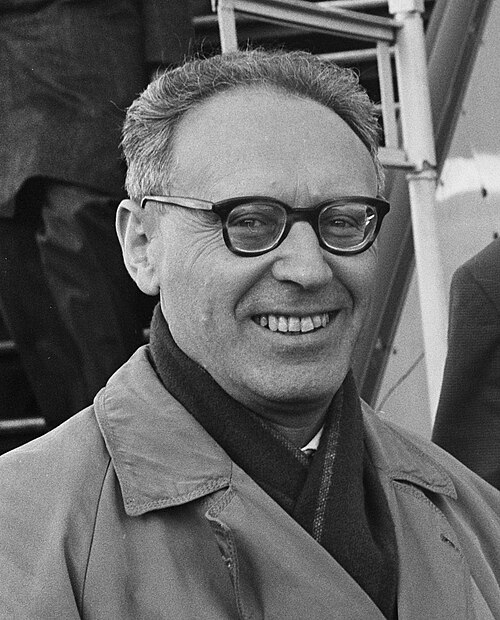
Mikhail Botvinnik (1911–1995) was the sixth world chess champion and the first from the Soviet Union. He won the title three times, in 1948, 1958 and 1961. Just as important, he showed how to train for chess like a scientist, and his chess school helped produce three later world champions: Anatoly Karpov, Garry Kasparov and Vladimir Kramnik.
Engineer and chess player
Botvinnik was born on 17 August 1911 in Kuokkala, a village near St Petersburg that is now called Repino. In 1925, aged 14, he beat the world champion José Raúl Capablanca in a simultaneous exhibition, an event where one master plays many opponents at once. In 1931 he won the championship of the USSR for the first time; he would win it six times in all.
Chess was never his only job. Botvinnik trained as an electrical engineer, kept working as one alongside chess and earned a doctorate in 1951. In 1938 he finished third at AVRO in the Netherlands, one of the strongest tournaments of its time, and there he played his most famous game.
World champion three times
When Alekhine died in 1946, the world had no champion. A special tournament of the best players was held in 1948, and Botvinnik won it with 14 points out of 20, three points ahead of the rest. His time as champion then had three parts:
- 1957: lost the title to Vasily Smyslov, and won it back in a rematch in 1958.
- 1960: lost to Mikhail Tal, and won it back in a rematch in 1961.
- 1963: lost it for the last time, to Tigran Petrosian.
He retired from competitive play in 1970, aged 59.
Training like a scientist
Botvinnik's methods were unusual in his day, but many of them are normal for strong players now:
- He exercised every day and kept himself fit.
- He played a small number of openings, but studied them very deeply.
- He wrote careful notes on his own games and published them, so others could find his mistakes.
- He studied each opponent's strengths and weaknesses before playing them.
- He played practice games in noisy, smoky rooms, to get used to bad playing conditions.
- He was honest, even harsh, about his own weaknesses.
The Botvinnik school
In 1963 Botvinnik started his own school for talented young players. Its pupils included three future world champions: Anatoly Karpov, Garry Kasparov and Vladimir Kramnik. Karpov later said that Botvinnik's homework clearly improved his play. For this work Botvinnik became known as the patriarch of the Soviet chess school. In his later years he also worked on chess computer programs.
Famous game: Botvinnik vs Capablanca, AVRO 1938
On 22 November 1938, in round 11 of AVRO, Botvinnik had White against the former world champion. The game began with the Nimzo-Indian Defence. Botvinnik built a strong pawn centre while Capablanca's pieces went off to win pawns on the queenside. Then White's e-pawn reached e6, and Botvinnik struck with 30.Ba3, offering his bishop.
The bishop was a decoy. When Black's queen took it, the queen left e7, the square in front of White's e-pawn. Botvinnik then gave up his knight with 31.Nh5+, his queen came in with checks, and the pawn marched to e7. Using a sacrifice to pull a defender away like this is called deflection. Capablanca's queen gave many checks, but White's king walked out of them, and Black resigned with the pawn about to become a queen.
Garry Kasparov later called it "the game of his life" for Botvinnik.
The moves: 1.d4 Nf6 2.c4 e6 3.Nc3 Bb4 4.e3 d5 5.a3 Bxc3+ 6.bxc3 c5 7.cxd5 exd5 8.Bd3 O-O 9.Ne2 b6 10.O-O Ba6 11.Bxa6 Nxa6 12.Bb2 Qd7 13.a4 Rfe8 14.Qd3 c4 15.Qc2 Nb8 16.Rae1 Nc6 17.Ng3 Na5 18.f3 Nb3 19.e4 Qxa4 20.e5 Nd7 21.Qf2 g6 22.f4 f5 23.exf6 Nxf6 24.f5 Rxe1 25.Rxe1 Re8 26.Re6 Rxe6 27.fxe6 Kg7 28.Qf4 Qe8 29.Qe5 Qe7 30.Ba3 Qxa3 31.Nh5+ gxh5 32.Qg5+ Kf8 33.Qxf6+ Kg8 34.e7 Qc1+ 35.Kf2 Qc2+ 36.Kg3 Qd3+ 37.Kh4 Qe4+ 38.Kxh5 Qe2+ 39.Kh4 Qe4+ 40.g4 Qe1+ 41.Kh5 1-0
Replay it on the analysis board.
Legacy
Botvinnik was the first of a long line of Soviet world champions. His idea that chess should be studied with discipline and honesty, like a science, shaped how top players have trained ever since. He died in Moscow on 5 May 1995. Find him among the other title holders on our world chess champions page.
Sources
- Mikhail Botvinnik, Wikipedia
- Mikhail Botvinnik, World Chess Hall of Fame
- Botvinnik versus Capablanca, AVRO 1938, Wikipedia (game score)
Checked in November 2026.
Questions and answers
- How many times was Botvinnik world champion?
- Three times. He won the title in 1948, lost it to Smyslov in 1957 and won it back in 1958, then lost it to Tal in 1960 and won it back in 1961. He lost it for the last time to Petrosian in 1963.
- Who were Botvinnik's famous students?
- His chess school, started in 1963, trained the future world champions Anatoly Karpov, Garry Kasparov and Vladimir Kramnik, along with many other strong players.
- Why is Botvinnik called the patriarch of Soviet chess?
- He was the first Soviet world champion, and after retiring in 1970 he spent years training young Soviet players. His scientific approach became a model for the Soviet chess school.
- Was Botvinnik an engineer?
- Yes. He was an electrical engineer with a doctorate (1951), and in his later years he also worked on chess computer programs.
Play free now — no sign-up needed